-


-
+90 212 215 50 55
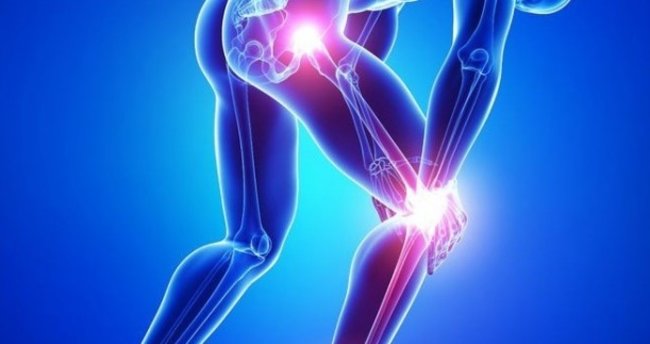
As a result of the contraction, swelling or hardening of this muscle, we call the priformis syndrome, which manifests itself as pain starting from the hip and spreading to the foot. It is a very uncomfortable pain for the patient. It hurts when you sit, it hurts when you walk. Its importance is that it is confused with sciatic pain that spreads to the leg as a result of compression of the sciatic nerve from the waist, compression of the hernia, which is called sciatica among the people. If care is not taken, priformis pain can be treated as hernia pain, nerve pain, and we have encountered this situation a lot. Surgeon friends operate on the patient because of herniated disc, but the patient's pain does not go away, this time they send the patient to see a pain specialist and send the patient to us, so when we inject a simple local anesthetic drug, the patient's pain is immediately relieved. The patient, who comes with a stretcher, starts walking in amazement. Of course, we do not want such a situation to happen to any doctor.
In some literature, this priformis syndrome is also called “pseudo sciatica”. In fact, it is natural to be confused with sciatic pain. The reason is that when the priformis muscle is in a contracted state or becomes swollen, since the sciatic nerve passes just below it, it presses on this nerve, causing pain and false herniated disc complaints. Attentive, careful, experienced doctors can easily distinguish between these conditions.
Although the cause of priformis syndrome is variable, how it develops is a bundle of complaints that is not fully understood. However, the main reason can be summarized as contraction of the piriformis muscle, edema (swelling) due to inflammation and, as a result, sciatic nerve compression that occurs in the later stages. Early diagnosis is important in priformis syndrome, and if it is intervened early, the problem may disappear, perhaps not recurring. In order to diagnose piriformis syndrome, which is one of the rare causes of low back pain, the presence of such a disease should first be considered by the physician examining the patient.
Pain that increases with prolonged sitting
Extreme pain when pressing on the palpable piriformis muscle in the form of a hardened band
Tenderness in the hip
Pain that increases when the leg is turned inward
Pain that becomes evident at the points where it passes the sciatic nerve by pressing
Pain may increase with walking
Sciatica pain usually does not go down to the toes
Pain in the hip when the foot is tried to be lifted
Stretching the sciatic nerve can increase pain
Weakness in the leg areas below the pain
It can be caused by trauma, falls, and bumps, usually to the pelvis or hips
Surgery in this area
Frequent injections into the priformis muscle
Anatomical disorders of the priformis muscle
When the problem in one hip is compensated by the other hip
Being short of one leg is one of the reasons that overloads the other hip muscles
Sometimes Fibromyalgia or myofascial (muscle origin) pain syndromes are also effective
Problems due to psychological reasons
More Common in Women
Sciatica is 6 times more common in women. Back and hip region pains are caused by priformis syndrome at a rate of 8 percent. It is also called pseudo-sciatica. Diagnosis can be made by manual examination. In other words, the diagnosis of piriformis can only be made by performing a physical examination. On the other hand, if the patient's pain is severely relieved when an experienced physician injects a simple local anesthetic into the most painful point after pressing the contracted, painful piriformis muscle with his finger, the diagnosis is priformis syndrome.
It is necessary to take some simple measures to rule out situations that increase pain complaints. For example, it is important to correct the triggers such as carrying a wallet in a back pocket, sitting at a desk for a long time, and abnormal postures. We often witness that psychological problems arise in this muscle for some reason. Therefore, psychological relief of the patient is an important step in the treatment and should not be neglected.
In addition to physiotherapeutic approaches, applying a special type of massage also contributes to the treatment. However, this type of massage, which is not known in our country, is called "Rolfing massage". The hardened priformis muscle, which feels like tape or salami, is loosened with this special massage application, the blood flow to the muscle is increased and the contraction of the muscle is resolved. Physical therapy methods can be used. In this context, deep tissue laser applications can be performed to provide tissue healing, to regulate intramuscular circulation, and to reduce local muscle spasm.
If false sciatica is not diagnosed on time, it can be confused with a 'lower back hernia' and cause unnecessary surgeries. This week, I'm going to tell you about the "Priformis Syndrome", that is, pseudo-sciatica. Priformis is the special name for a muscle located inside our hip. The priformis is a special muscle where the bone from the leg, which we call the femur, joins the hip, with one end extending to this bone and the other end to the coccyx region.


